


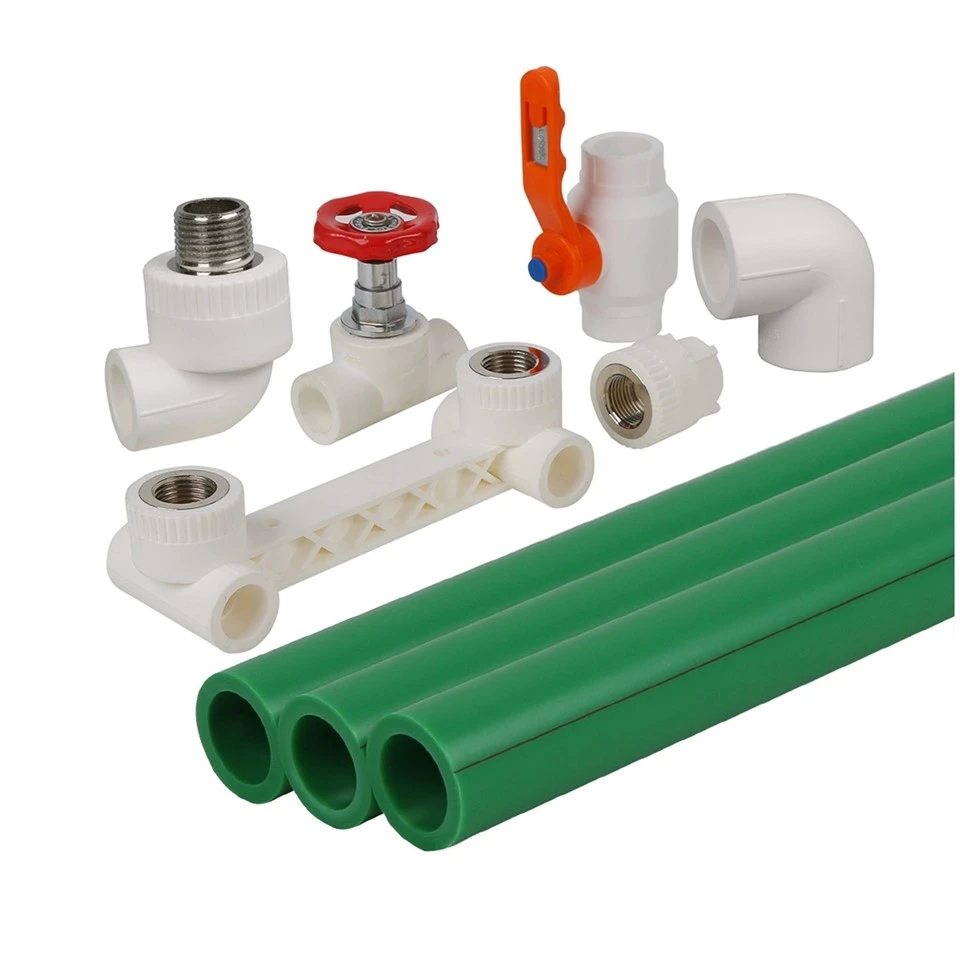
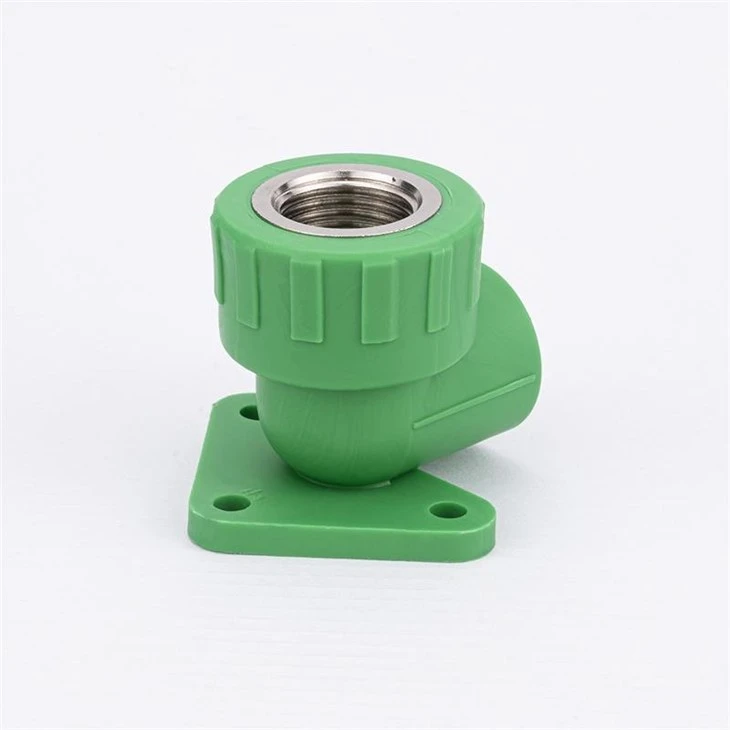
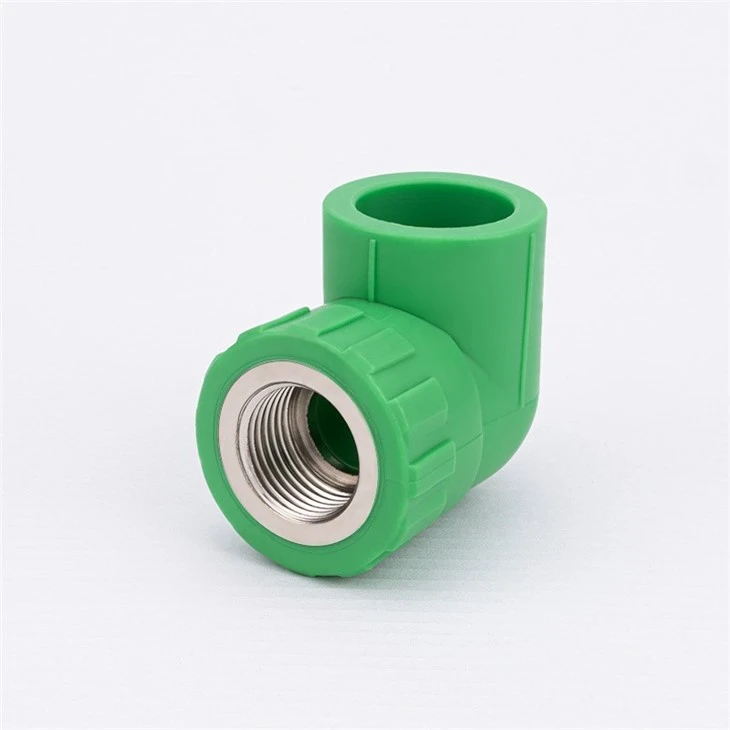
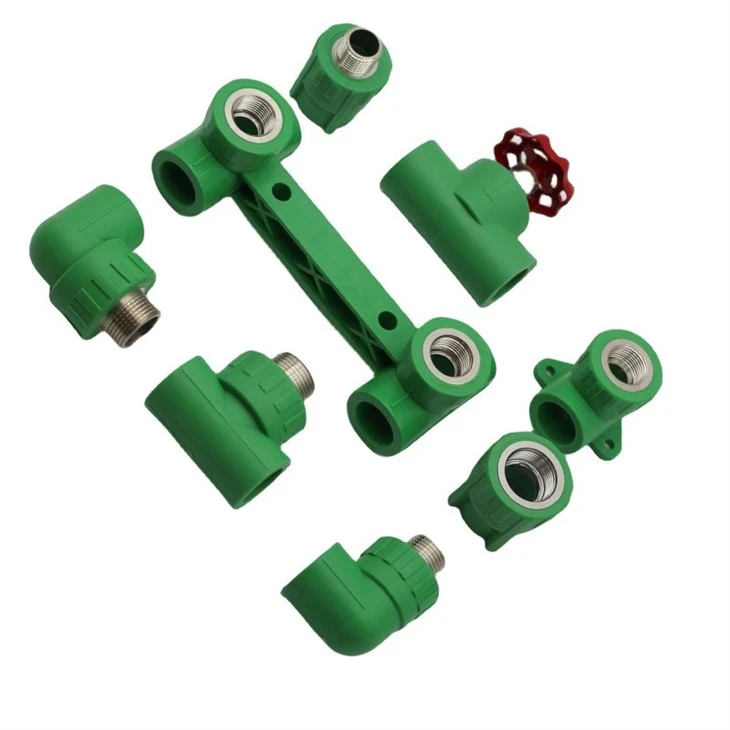
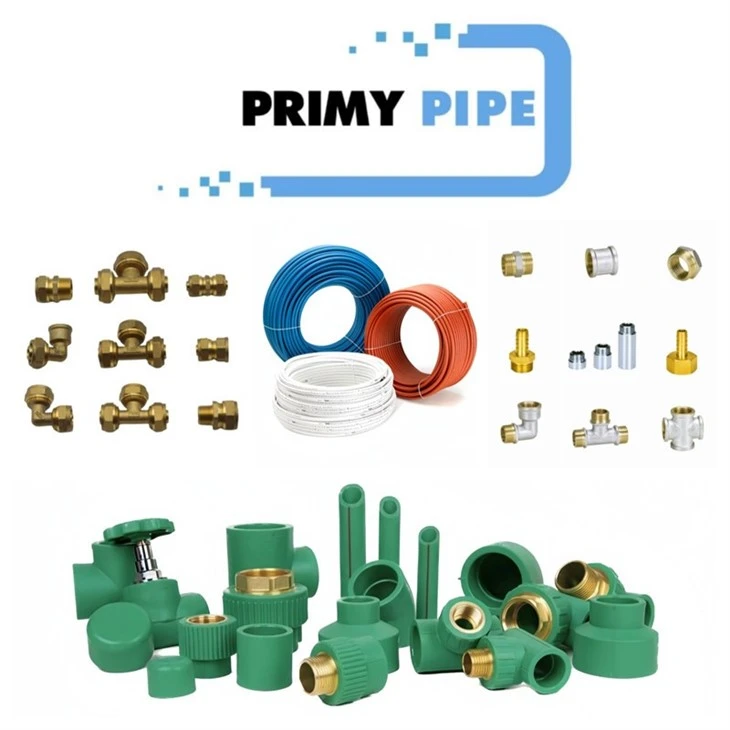
Product Overview
| Material | Random Polypropylene & Iron |
| Size | full 20mm through 63mm available |
| Pressure Rating | 2.5MPa or other nominal pressures availale upon request |
| Standard | GB/T 18742-3, ISO 15874-3, EN ISO 15874-3, BS EN ISO 15874-3 |
| Color | white, green, gray, or customized color |
| Joint | Joining pipe and socket joint fittings by socket fusion joint |
| Packing |
Export package or as customer's request |

Iron PPR fittings have become a popular option for plumbing and mechanical systems where both corrosion resistance and rigidity are required. Compared to plastic fittings, iron PPR fittings offer superior strength and ability to withstand high pressures and temperatures.
Iron PPR fittings consist of a polypropylene random copolymer inner layer bonded to an external iron sleeve or reinforcement. The polypropylene base provides corrosion resistance and reliability, while the iron external layer gives the fitting added strength and rigidity.
Iron PPR fittings are available in a range of metric sizes from 20mm to 160mm for various plumbing, heating, industrial and mechanical applications. They offer better heat resistance and pressure handling versus all-plastic fittings.
There are a few key differences between brass and iron PPR fittings:
- Material - Brass PPR fittings are made from brass alloy while iron PPR fittings are made from ductile iron.
- Corrosion Resistance - Brass has better corrosion resistance compared to iron. Brass fittings are more suitable for carrying corrosive fluids.
- Strength - Iron PPR fittings have higher tensile strength and can withstand higher pressures compared to brass. Iron is less prone to deformation under pressure.
- Weight - Brass fittings are lighter in weight than similar sized iron fittings. This makes them easier to transport and install.
- Cost - Iron fittings are generally cheaper than brass fittings.
- Thermal Conductivity - Brass has lower thermal conductivity than iron. This makes brass fittings better insulators.
- Appearance - Brass has a distinct golden appearance while iron fittings are grey. Some prefer the look of brass over iron.
- Applications - Brass fittings are commonly used for hot and cold potable water supply systems. Iron fittings are preferred for projects that require high pressure ratings such as pumping and compressed air systems.
In summary, iron PPR fittings can withstand higher pressures and are sold with better prices. It is the best choice for economic projects.

As an innovative manufacturer of high-performance plumbing products, Zhuji Primy Pipe Co., Ltd. offers a full line of PPR pipes and fittings crafted to deliver strength, ease of use and an attractive appearance.
Working from a complete plumbing system, we map out each stage of the process from initial inquiry to final sale and dispatch. we focus on understanding each client's unique needs and offer customized solutions to ensure satisfaction from all our clients.
Hot Tags: iron PPR fitting, China iron PPR fitting manufacturers, suppliers, factory


